
# HubDB

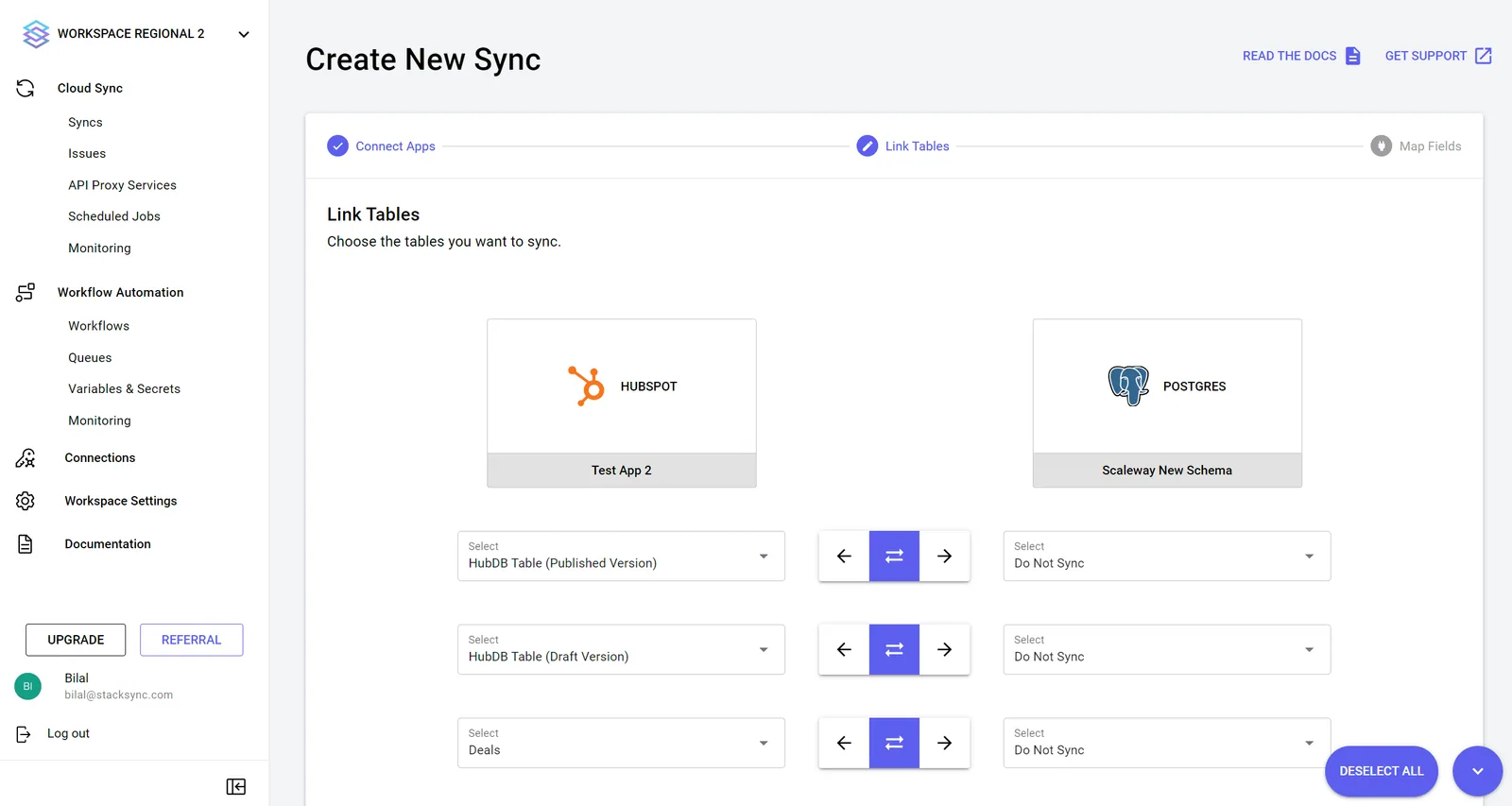
Stacksync supports both syncing existing HubDB tables and generating new HubDB tables. Choose whether to sync the Published or Draft versions.&#x20;

{% hint style="info" %}
Syncing published HubDB tables will cause draft changes to be published.
{% endhint %}

If you're syncing an existing HubDB table, you can choose the version when linking tables.&#x20;

<figure><img src="/files/AzxmfdV7W8IaJJbBch7j" alt=""><figcaption></figcaption></figure>

If you're generating a new table in HubDB, choose the version when mapping fields.
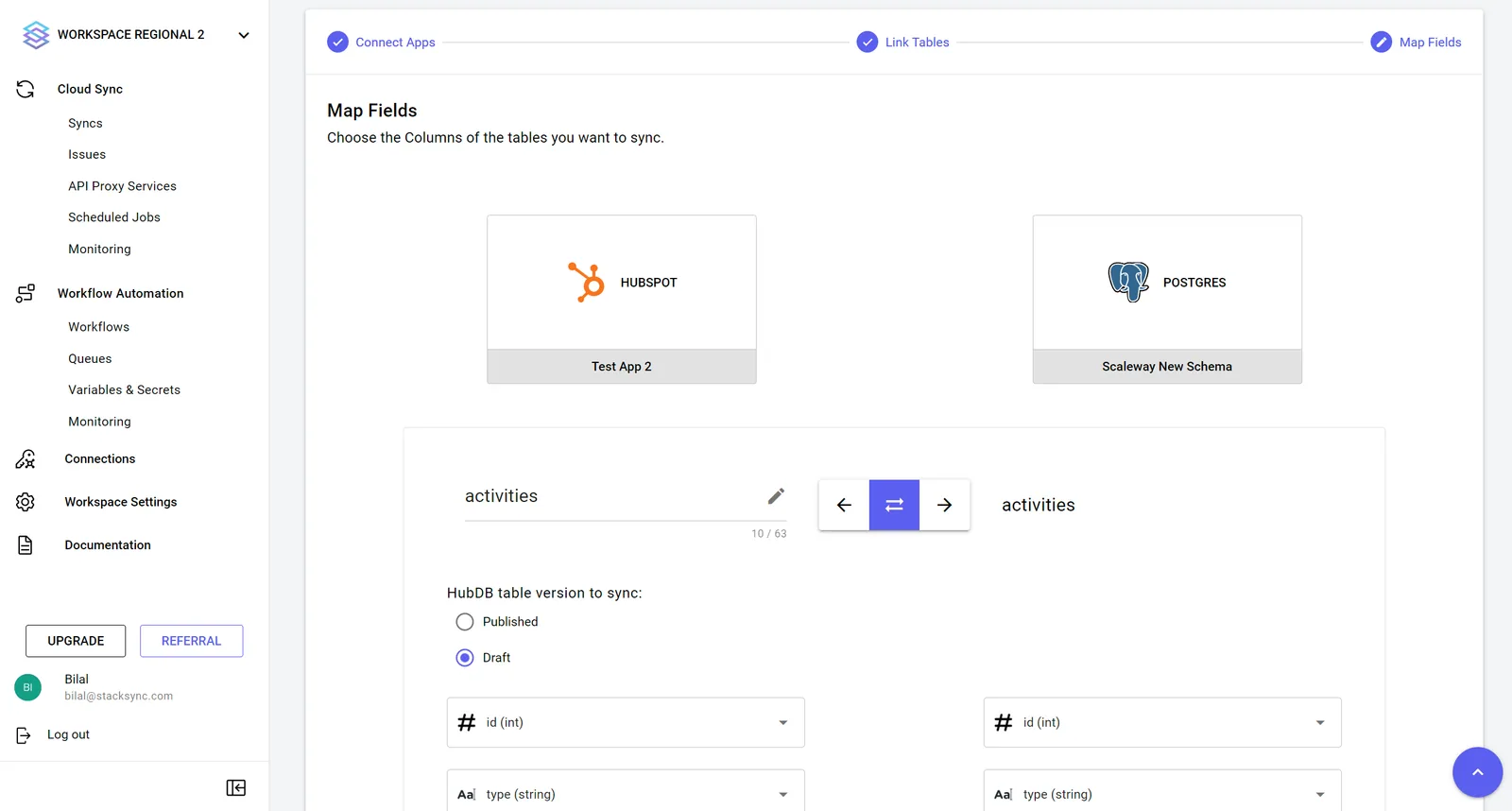
<figure><img src="/files/xZIq046ADeBLSpa0gwNp" alt=""><figcaption></figcaption></figure>


---

# Agent Instructions: Querying This Documentation

If you need additional information that is not directly available in this page, you can query the documentation dynamically by asking a question.

Perform an HTTP GET request on the current page URL with the `ask` query parameter:

```
GET https://docs.stacksync.com/two-way-sync/connectors/hubspot/hubdb.md?ask=<question>
```

The question should be specific, self-contained, and written in natural language.
The response will contain a direct answer to the question and relevant excerpts and sources from the documentation.

Use this mechanism when the answer is not explicitly present in the current page, you need clarification or additional context, or you want to retrieve related documentation sections.