
> For the complete documentation index, see [llms.txt](https://docs.stacksync.com/llms.txt). Markdown versions of documentation pages are available by appending `.md` to page URLs; this page is available as [Markdown](https://docs.stacksync.com/connectors/postgres/authorize-postgres/heroku.md).

# Heroku

For Heroku, use the "Postgres Heroku" connector.

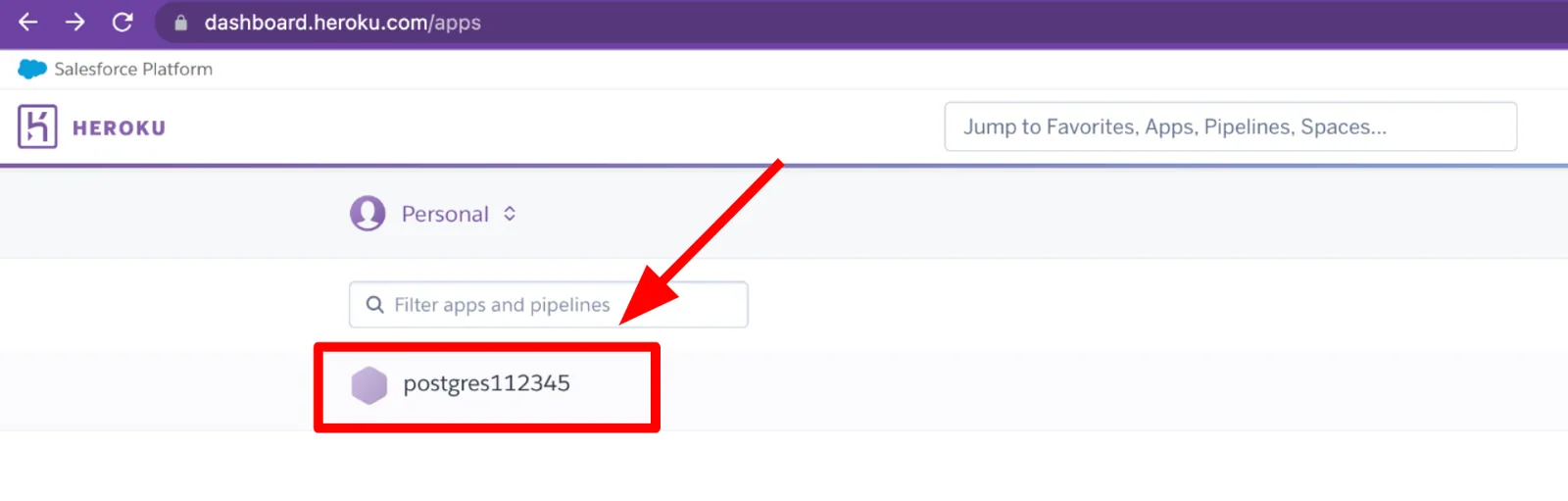
#### 1. Go to <https://dashboard.heroku.com/apps>

#### 2. Open one of your apps

<figure><img src="/files/58nRDRfmPKFOStrme6es" alt=""><figcaption></figcaption></figure>

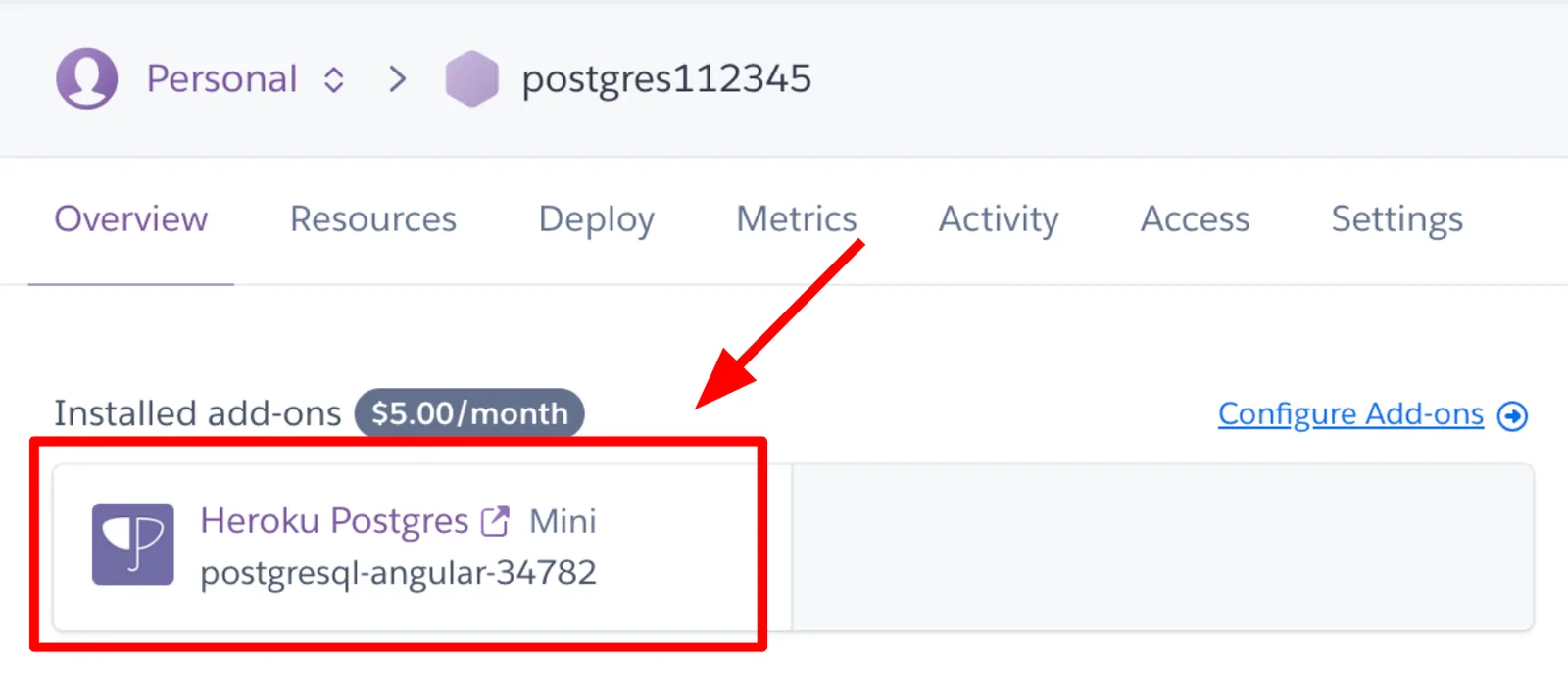
#### 3. Open your database add-on

<figure><img src="/files/79IEr2MRiRPPW60FvBeq" alt=""><figcaption></figcaption></figure>

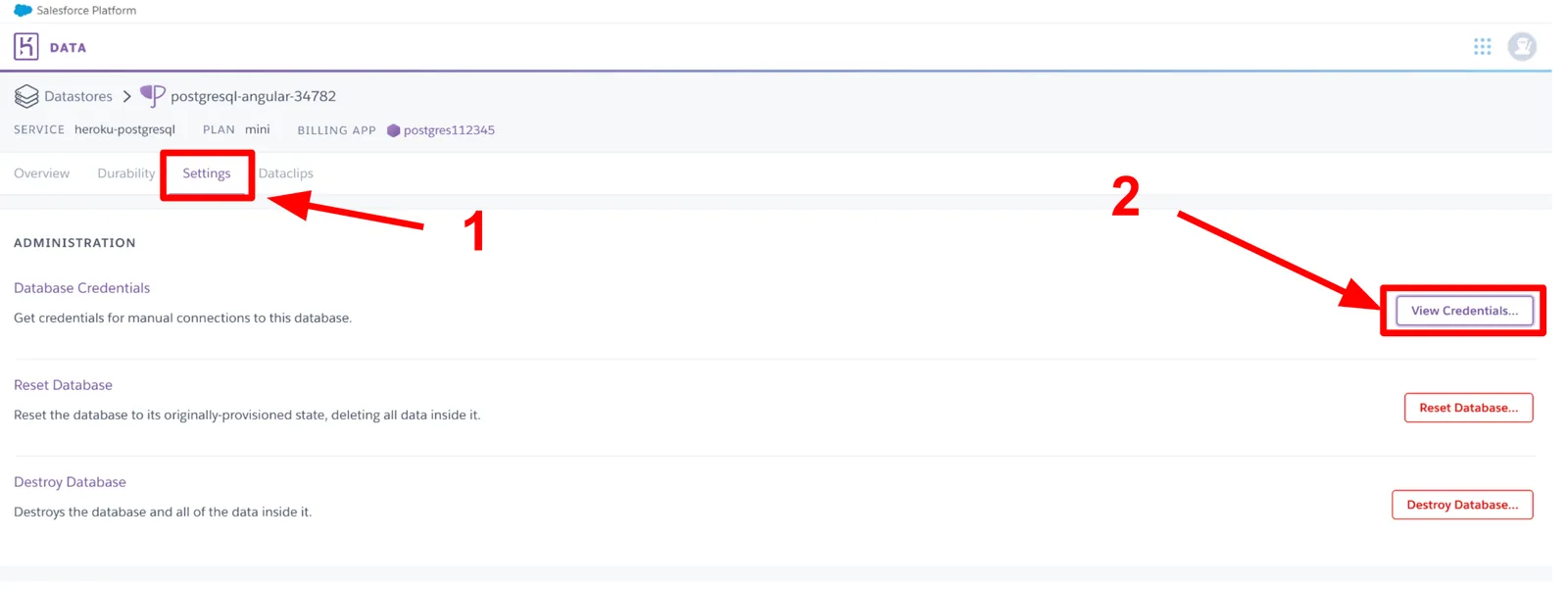
#### 4. Go to settings and view Database credentials
<figure><img src="/files/6MHFyimaYVrgB4ZVXW7x" alt=""><figcaption></figcaption></figure>

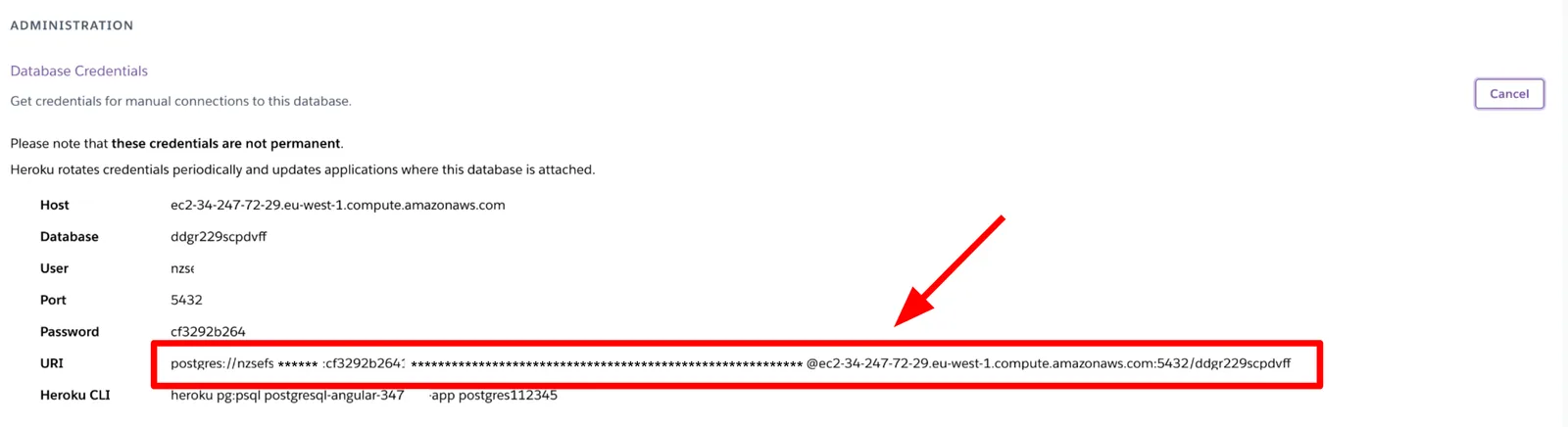
#### 5. Copy Connection URI

<figure><img src="/files/Nc9Ytn6jUWRF8Uoyrv7s" alt=""><figcaption></figcaption></figure>

#### 6. Paste the connection URI into Stacksync to connect your database
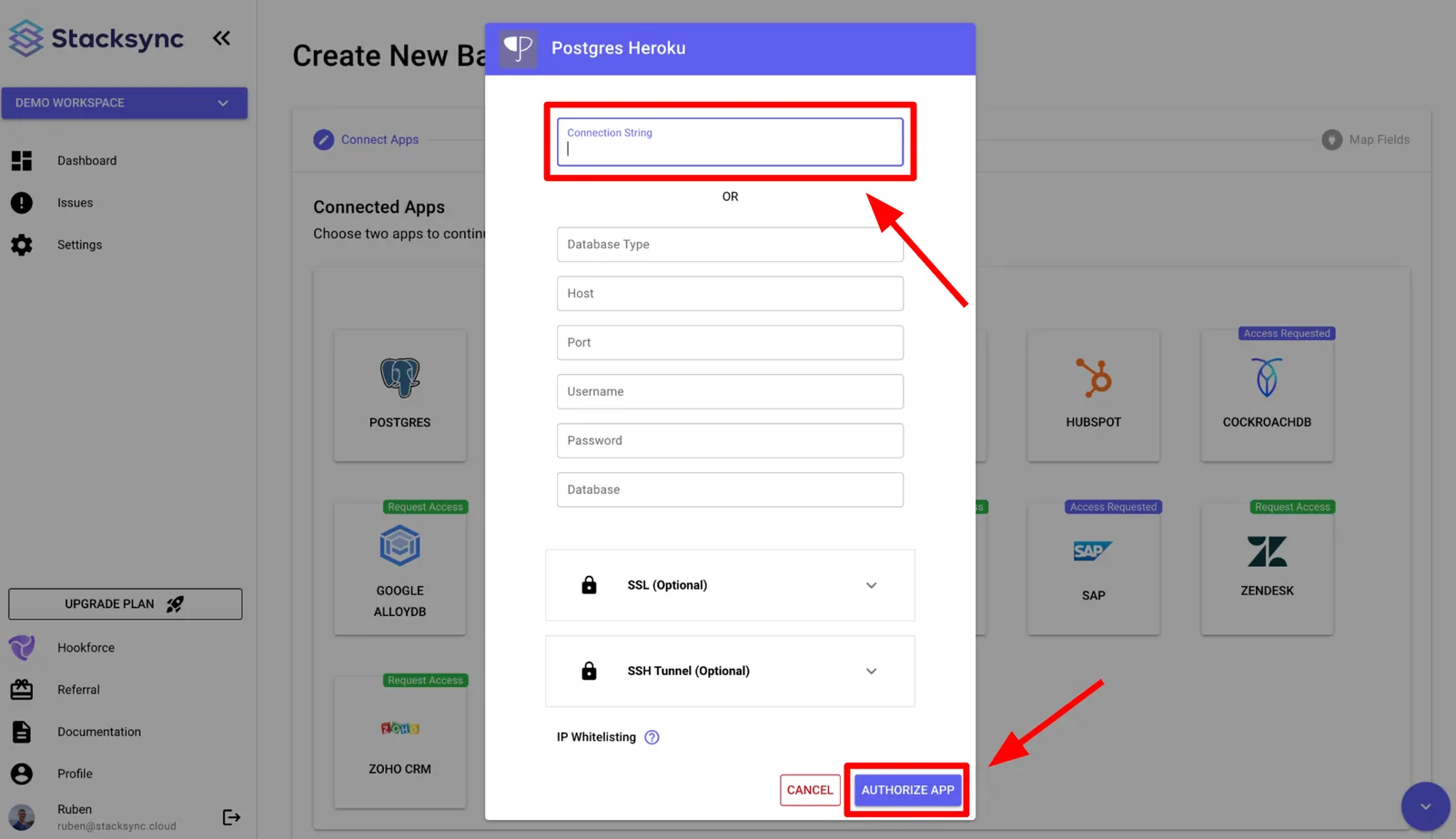
<figure><img src="/files/xdEw2I6MMqdgqPkklvsO" alt=""><figcaption><p>Paste your connection URL to connect your database</p></figcaption></figure>

{% hint style="info" %}
For the Heroku connector, the user is required to have the **Create** privilege on the database.

This privilege can be enabled for the user using the following SQL query:

```sql
GRANT CREATE ON DATABASE database_name TO user_name;
```

{% endhint %}

Finally, click "Authorize App" to connect!

That's it, your Postgres Heroku instance is connected! 🎉